


Is the Ford Super Duty F-350 better than the GMC Sierra 3500 HD for towing around Pleasanton, TX?
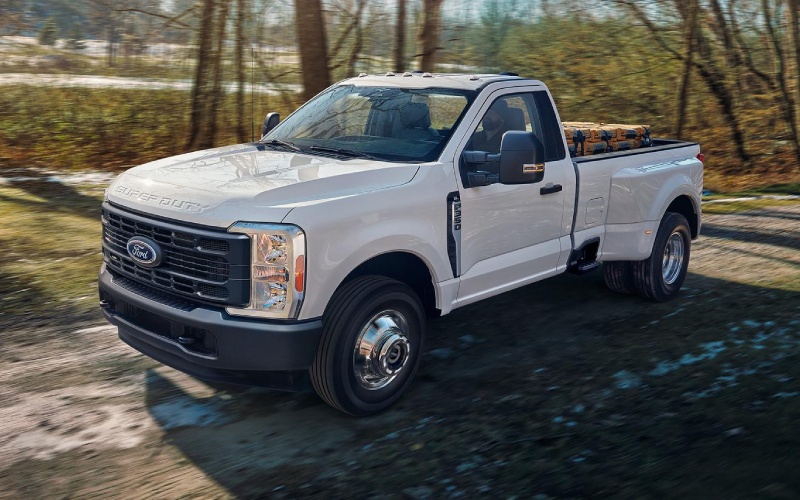
Ancira Ford Floresville – Is the Ford Super Duty F-350 better than the GMC Sierra 3500 HD for towing around Pleasanton, TX?
For shoppers comparing a Ford Super Duty® F-350® and a GMC Sierra 3500 HD, the most common question is simple: which heavy-duty truck is better for towing? The answer depends on the trailer, the load, the route, and how often the truck will be used at or near its limits. Around Pleasanton, TX, that can mean hauling livestock, moving equipment, pulling a large flatbed, towing a fifth-wheel RV, or supporting a business that covers multiple South Texas communities. Both trucks are legitimate heavy-duty pickups, and both offer diesel power, automatic transmissions, trailering technology, and premium trims. Still, when towing strength and towing confidence are the deciding factors, Ford has several clear advantages worth understanding.
The Ford Super Duty® F-350® stands out because it combines high published capability with a broad range of technologies designed specifically to make towing easier. Ford lists a maximum available diesel-powered gooseneck tow rating of 40,000 lbs for Super Duty® trucks, along with a maximum available payload rating of 8,000 lbs. The available 6.7L High Output Power Stroke® V8 Turbo Diesel B20 engine delivers 500 horsepower and 1,200 lb-ft of torque, giving drivers serious pulling strength for demanding loads. The GMC Sierra 3500 HD is also strong, with available towing up to 36,000 lbs and an available Duramax 6.6L Turbo-Diesel V8 engine. The GMC is impressive, but Ford’s available maximum towing, payload, diesel horsepower, and diesel torque ratings give shoppers more capability headroom.
Why towing numbers matter in real use
Maximum ratings are not just marketing figures. For many truck owners, extra capacity can make a difference in how confidently a pickup handles a large trailer, especially when the load changes from one trip to the next. A rancher may tow a gooseneck stock trailer one day and a flatbed loaded with equipment the next. A contractor may carry tools in the bed while also towing a skid steer, generator, or materials trailer. When a truck offers more available payload and more available towing capacity, the owner has more flexibility to configure the truck for the job.
That is where the Super Duty® F-350® creates separation. Ford’s available 40,000-lb gooseneck tow rating gives it an advantage over the Sierra 3500 HD’s available tow rating of up to 36,000 lbs. The Ford also offers a maximum available payload rating of 8,000 lbs, which helps when the bed has to carry heavy materials, ranch supplies, tools, or a fifth-wheel hitch setup. The GMC Sierra 3500 HD remains a capable truck, but Ford’s higher available maximums are hard to overlook for drivers who buy a heavy-duty pickup specifically to work.
Powertrain comparison: Ford offers more engine choices
Another important difference is engine variety. Ford gives shoppers four Super Duty® engine options: the 6.8L 2V DEVCT NA PFI V8 gas engine, the 7.3L 2V DEVCT NA PFI gas engine, the 6.7L 4V OHV Power Stroke® V8 Turbo Diesel B20 engine, and the available 6.7L High Output Power Stroke® V8 Turbo Diesel B20 engine. This range lets shoppers choose a work-focused gas engine, a larger gas V8, a powerful diesel, or the high-output diesel for maximum torque. Each is paired with a smooth 10-speed automatic transmission designed to support confident power delivery.
The GMC Sierra 3500 HD keeps its lineup more focused, with a standard 6.6L V8 gas engine and an available Duramax 6.6L Turbo-Diesel V8 engine, also paired with a 10-speed automatic transmission. That combination is proven and capable, but Ford’s broader engine selection can be a meaningful advantage for shoppers who want the truck tailored more closely to the job. Not every owner needs the highest-output diesel, and not every driver wants the same gas engine. Ford gives more ways to match capability, use case, and personal preference.
Towing technology can be just as important as torque
Heavy towing is not only about pulling the trailer down the road. The hard parts often happen before the trip starts or while maneuvering in tight spaces. Lining up a hitch, backing a trailer through a gate, judging tongue weight, and keeping the trailer settled all require skill and attention. Ford supports those tasks with available technologies such as Pro Trailer Hitch Assist™, Pro Trailer Backup Assist™, Trailer Reverse Guidance, a 360-Degree Camera, and Onboard Scales with Smart Hitch.
- Pro Trailer Hitch Assist™: Helps make hitch alignment easier by assisting with steering, throttle, and braking during the hookup process.
- Pro Trailer Backup Assist™: Helps simplify trailer reversing by letting the driver guide trailer direction with more confidence.
- Onboard Scales with Smart Hitch: Helps estimate payload and tongue weight so drivers can better understand load balance.
- 360-Degree Camera: Helps improve visibility around the truck when parking, hitching, or maneuvering near obstacles.
GMC also offers useful trailering tools, including the ProGrade® Trailering System with In-Vehicle Trailering App, available camera views, available transparent trailer view, and available Adaptive Cruise Control with trailering. Those features are valuable. Ford’s advantage is the way its available towing tools address the full towing process, from hitching to backing to understanding load balance. For drivers who tow frequently, those conveniences can make the truck easier to live with.
Comfort and control on long towing days
A heavy-duty truck still needs to be comfortable. The Super Duty® F-350® can be equipped with modern cabin features such as SYNC® 4, an available 12″ center display, available head-up display, wireless charging, available premium seating materials, and an available interior work surface. The interior is built to support long hours, whether the truck is being used for commercial work, family travel, or ranch management. Ford also offers trims that range from durable and simple to upscale and highly appointed, making it easier to choose the right level of comfort.
The GMC Sierra 3500 HD also offers a premium cabin, especially in Denali and Denali Ultimate trims. Available features include a 13.4″ diagonal center touchscreen, 12.3″ diagonal digital Driver Information Center, full-grain leather seating on select trims, Bose® audio, and available massage front seats. GMC certainly does luxury well. Ford’s strength is that its comfort features are paired with a highly work-focused layout and technology that directly supports towing and productivity. For shoppers who need a heavy-duty pickup to serve as both a tow rig and a daily command center, Ford feels especially well rounded.
Which truck is the better fit for South Texas drivers?
For buyers serving San Antonio, Pleasanton, and Jourdanton, road conditions and driving needs can change quickly. A truck may spend one morning on the highway, the afternoon on a ranch road, and the next day pulling a trailer through a crowded commercial area. The Ford Super Duty® F-350® is built for that kind of variety. Available off-road packages such as the Tremor® Off-Road Package, FX4® Off-Road Package, and XL Off-Road Package add confidence beyond pavement, while available towing systems help when the truck is paired with larger trailers.
GMC’s Sierra 3500 HD has its own off-road strengths, especially with AT4 and AT4X trims, and its available camera systems are helpful for trailering. Yet the Ford brings higher available maximum capability, stronger available diesel output, broader engine choice, and deeply integrated trailering assistance. That combination makes the Super Duty® F-350® the easier recommendation for shoppers who want one truck that can handle serious work while still offering comfort, technology, and everyday drivability.
Quick decision guide
- Choose Ford for maximum towing headroom: The Super Duty® lineup offers a higher available diesel-powered gooseneck tow rating than the Sierra HD.
- Choose Ford for payload strength: The maximum available 8,000-lb payload rating helps support demanding bed and hitch loads.
- Choose Ford for towing assistance: Available Pro Trailer Hitch Assist™, Pro Trailer Backup Assist™, and Onboard Scales with Smart Hitch add practical confidence.
- Choose Ford for engine variety: Four available engines give shoppers more ways to match the truck to real use.
Ancira Ford Floresville can help shoppers compare configurations, cab styles, drivetrains, bed choices, and available towing technologies to find the right Super Duty® F-350® for the job. A heavy-duty truck is a long-term tool, so choosing the model with stronger available capability and smarter towing support can make daily ownership easier.
Frequently Asked Questions:
Is the Ford Super Duty® F-350® stronger than the GMC Sierra 3500 HD for maximum towing?
Based on published maximum available ratings, Ford has the advantage. Super Duty® trucks offer an available diesel-powered gooseneck tow rating up to 40,000 lbs, while GMC lists available towing up to 36,000 lbs for the Sierra 3500 HD.
Does the GMC Sierra 3500 HD still offer good towing technology?
Yes. GMC offers helpful features such as the ProGrade® Trailering System, available camera views, available transparent trailer view, and available Adaptive Cruise Control with trailering. The Ford advantage comes from additional available tools such as Pro Trailer Hitch Assist™, Pro Trailer Backup Assist™, and Onboard Scales with Smart Hitch.
Which truck is better for drivers who tow often?
For frequent towing, the Ford Super Duty® F-350® is the stronger recommendation because it combines higher available maximum ratings, powerful diesel torque, broad engine selection, and available technology that supports hitching, backing, load management, and visibility.
0 comment(s) so far on Is the Ford Super Duty F-350 better than the GMC Sierra 3500 HD for towing around Pleasanton, TX?