


Do I Need the 8-Foot Bed to Tow a 5th-Wheel with a 2026 F-350 near Boerne, TX?
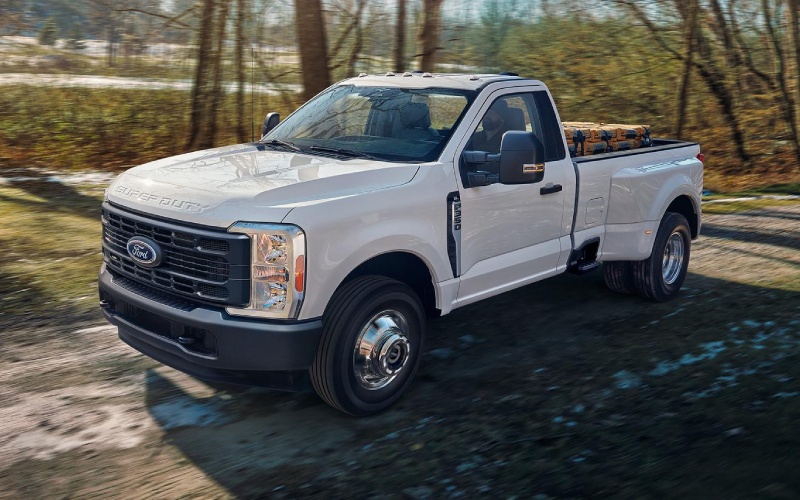
Ancira Ford Floresville – Do I Need the 8-Foot Bed to Tow a 5th-Wheel with a 2026 F-350 near Boerne, TX?
Choosing between the 6.75-foot short bed and 8-foot long bed on a 2026 Ford Super Duty® F-350® is a decision that shows up the first time you plan a fifth-wheel or gooseneck tow. Around Boerne and the Hill Country, where ranch gates, tight feed-store lots, and low-speed turns through neighborhood streets are part of everyday towing, the right bed length can make your setup easier, safer, and more predictable. At Ancira Ford Floresville, we help drivers match real trailers to real roads, and this guide focuses on the single most practical question we hear from in-market shoppers near Boerne, TX: do you truly need the 8-foot bed to tow a fifth-wheel?
Short bed vs. long bed for fifth-wheel towing
The 8-foot long bed remains the gold standard for traditional fifth-wheel towing because it maximizes cab-to-trailer clearance in tight turns. That extra space between the back of the cab and the trailer’s front cap helps prevent contact when you’re backing into angled driveways off I-10 frontage roads or easing around a ranch barn on uneven caliche. The longer wheelbase can also add a planted feel when crosswinds pick up on the way to Kerrville or Comfort.
The 6.75-foot bed can absolutely work for fifth-wheels—many Boerne-area owners prefer the maneuverability and easier garage fit—but it typically requires the right hitch solution to protect the cab in sharp turns. An automatic or manual sliding fifth-wheel hitch, or a rotating pin box design that moves the pivot point rearward, can deliver the clearance you need. For gooseneck towing, an offset coupler can also help on a short bed. The key is matching hitch hardware to your trailer’s shape and the F-350’s geometry.
How the 2026 Super Duty® F-350® supports either choice
Every 2026 Super Duty® is engineered for serious work: available engines include the 6.8L gas V8, 7.3L gas V8, 6.7L Power Stroke® V8 Turbo Diesel, and 6.7L High Output Power Stroke® V8 Turbo Diesel. Paired with a TorqShift® 10-speed and a fully boxed, high-strength steel frame, the F-350® brings the muscle and control you want when you’re towing a large fifth-wheel to a weekend at Boerne City Lake or hauling a stock trailer out toward Sisterdale.
What really helps you live with your setup day-to-day are the available towing technologies. Pro Trailer Backup Assist™ simplifies tricky angles when you’re backing toward a campsite pad. Pro Trailer Hitch Assist™ can guide and control low-speed inputs to line up a conventional trailer ball and coupler, and the camera views help with bed-mounted hookups. Onboard Scales with Smart Hitch estimate tongue or pin weight to keep your fifth-wheel in the right range, while the 360-Degree Camera and PowerScope® trailer tow mirrors improve situational awareness in crowded Main Street parking.
From a capability standpoint, the F-350® can be configured for the heavy pin weights that come with larger fifth-wheels, and Super Duty® trucks lead with best-in-class diesel-powered maximum available gooseneck towing. Actual ratings depend on configuration, so we help you map your specific trailer to an F-350® build that keeps ratings—and real-world control—on your side.
When a 6.75-foot bed makes the most sense
If you split time between towing and daily driving, or you park in tighter spaces around Boerne’s cafés and shops, the short bed’s overall length can be a big advantage. With the correct hitch—especially an automatic slider or a rotating pin box—you can achieve turning clearance that protects the cab at low speeds. Many modern fifth-wheel front caps are sculpted to improve maneuvering room with short beds, and gooseneck trailers often pair cleanly with an offset coupler. Combine that with available camera views and PowerScope® mirrors, and you have a setup that feels confident pulling out of H-E-B, threading onto FM 3351, and backing into your driveway without drama.
The long bed still wins for the simplest, least-compromised fifth-wheel experience, particularly for larger, square-front trailers and when you anticipate frequent jackknife maneuvers on narrow ranch roads. It also typically provides more in-bed cargo room for toolboxes or hay bales alongside the hitch and can support higher payload configurations. But for many Boerne drivers towing medium-size fifth-wheels or goosenecks, the short bed with the right hitch solution strikes an excellent balance.
As you weigh the choice, focus less on a one-size-fits-all rule and more on your exact trailer, your hitch hardware, and the places you drive most. Below are the real-life considerations our team walks through with shoppers from Boerne and the surrounding Hill Country.
- Trailer front-cap shape: Rounded, tapered caps buy you valuable inches in tight turns; boxier caps demand more space.
- Hitch type: Fifth-wheel sliders or rotating pin boxes improve short-bed clearance; gooseneck offsets can help too.
- Turning needs: Frequent sharp backing into angled ranch gates favors long bed or a proven slider setup.
- Bed cargo strategy: Long beds leave more room for toolboxes, coolers, or feed sacs around the hitch.
- Fuel and range: Longer wheelbases and available larger tanks can reduce stops on I-10 hauls.
- Parking realities: Short beds are easier downtown; long beds need more lane and lot planning.
A simple way to confirm your setup before you buy
We encourage hands-on validation. Bring your trailer measurements—or the trailer itself—and we will help you pressure-test the plan in and around Boerne. Here’s the quick process we use with local shoppers:
- Measure cab-to-axle and compare to your trailer’s front-cap overhang and kingpin location.
- Identify a compatible hitch: automatic slider, manual slider, or rotating pin box for fifth-wheels; offset coupler for goosenecks.
- Check estimated pin weight against the F-350® configuration’s payload and axle ratings.
- Use available 360-Degree Camera views to simulate tight turns and sightlines at low speed in our lot.
- Drive a short bed and a long bed on a route that mimics your life—Main Street traffic, FM 46 curves, and an I-10 merge.
- Verify with Onboard Scales with Smart Hitch once you’re set up to keep weight distribution in the target range.
This process removes guesswork and anchors your decision to the exact places you’ll tow—from the turn into River Road Park to that narrow approach to your barn. Our team sets up plenty of F-350® fifth-wheel and gooseneck rigs every week, and we will share what works best for your mix of roads, trailers, and gear.
Real-world examples from around Boerne
A family towing a 32-foot fifth-wheel to weekend spots along the Guadalupe River often prefers a 6.75-foot bed F-350® with an automatic slider for easy campsite maneuvering and less stress in town. A rancher hauling a wider, square-nose stock trailer on tight caliche roads may opt for an 8-foot bed for the most predictable clearance and extra room for fencing tools in the bed. Different needs, different answers—same goal: predictable, low-stress towing in the Hill Country.
Whichever path you choose, the 2026 Ford Super Duty® F-350® brings the hardware and technology to back you up. Powerful gas and diesel engine options deliver the torque to pull grades west of Boerne with confidence. Available driver-assist features—part of Ford Co-Pilot360® Assist+—can further reduce fatigue on long highway stretches, while advanced camera systems and PowerScope® mirrors make close-quarters maneuvers simpler.
If you are still on the fence, we recommend test-driving both bed lengths with a route that mirrors your life—school pickup, Main Street errands, and a quick loop toward Comfort—so you feel the difference in turning radius and stability. We are happy to set that up and walk the hitch options with you step by step.
Frequently Asked Questions:
Can Pro Trailer Hitch Assist™ help with a fifth-wheel or gooseneck hookup?
Pro Trailer Hitch Assist™ is designed to automate low-speed steering, throttle, and braking to line up a conventional trailer ball with a coupler. For fifth-wheel or gooseneck hookups, you will rely on the truck’s helpful camera views—such as the 360-Degree Camera—and careful positioning in the bed. Those views, plus available Pro Trailer Backup Assist™, still make the overall towing experience simpler and more precise.
Is a short-bed 2026 F-350® safe for fifth-wheel towing?
Yes, when equipped correctly. Many drivers near Boerne tow fifth-wheels confidently with the 6.75-foot bed by using a compatible sliding hitch or a rotating pin box. The key is ensuring adequate cab-to-trailer clearance at full lock and confirming pin weight is within your F-350® configuration’s ratings. We can help you verify the match and use Onboard Scales with Smart Hitch to monitor weight.
Will the 8-foot bed be too cumbersome around Boerne?
The long bed is larger and requires more space in lots and alleys, but many owners value its extra clearance and cargo room. With PowerScope® mirrors and available camera views, most drivers adapt quickly. We recommend a test drive through downtown Boerne and a few practice backs in our lot to see which length suits your daily routine.
Still deciding? Our team at Ancira Ford Floresville will take the time to measure, mock up, and test the combination that fits your trailer and the Hill Country roads you drive most. Whether you land on the 6.75-foot short bed with a smart hitch solution or the no-compromise 8-foot long bed, the 2026 Ford Super Duty® F-350® has the capability and towing technology to keep you confident from Boerne to Bandera and beyond.
Visit us off Hwy 181 in Floresville, call 830-216-4040, or reach out online to schedule a fifth-wheel or gooseneck towing consultation. We will help you build the right F-350® for your trailer and your life near Boerne, TX.
0 comment(s) so far on Do I Need the 8-Foot Bed to Tow a 5th-Wheel with a 2026 F-350 near Boerne, TX?